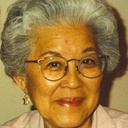
Aiko Herzig-Yoshinaga
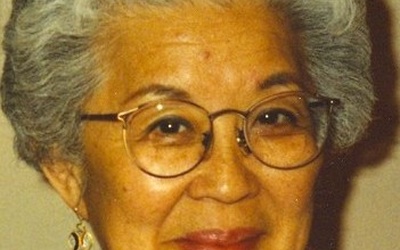
Aiko Herzig-Yoshinaga is an iconic figure among students, scholars and Nikkei (Japanese American) activists. Along with 110,000 other Nikkei on the West Coast, Aiko spent World War II in three concentration camps: Manzanar in California, Jerome and Rohwer in Arkansas. She resettled in New York City where she became involved with Asian Americans for Action. Later, she moved to Virginia near the National Archives in Washington, D.C. In 1981 she was hired as the primary researcher for the Commission on Wartime Relocation and Internment of Civilians (CWRIC).
Aiko and her husband, Jack Herzig, played a pivotal role in the redress movement through their research at the National Archives. The documents they found were also instrumental in the coram nobis cases that vacated the wartime convictions of Fred Korematsu and Gordon Hirabayashi. They conducted primary research of official documents for the National Council for Japanese American Redress in the class action lawsuit, William Hohri et.al., vs U.S.A. Aiko also worked for the Department of Justice’s Office of Redress Administration to help identify individuals in the Nikkei community eligible for the presidential apology and redress payment.
For over a decade, Aiko compiled and shared a growing list of euphemisms that obscure rather than reveal what really happened during the World War II Nikkei diaspora and gulag experience. That document was expanded to include a brief personal history that reviews her evolution from former incarceree and naive housewife to concerned citizen and researcher for the CWRIC. A glossary of terms relating to the wartime Nikkei diaspora-gulag includes euphemisms in need of replacement, and recommendations for a more accurate nomenclature on the subject.
She passed away on July 2018 at age 93.
Updated July 2018
Stories from This Author
WORDS CAN LIE OR CLARIFY: Terminology of the World War II Incarceration of Japanese Americans* - Part 5
March 2, 2010 • Aiko Herzig-Yoshinaga
Read Part 4 >> While a major controversy between the Nikkei and Jewish communities had been resolved, no such consensus emerged in responses to the JANM’s call for debate among its board members, staff, scholarly advisory group, and volunteers. Some suggested capitulating to the early warnings from the National Park Service, such as JANM board member Grant Ujifusa, who favored dropping “concentration camps” from the title for fear of having the exhibit rejected. But others, including this writer, sent indignant …
WORDS CAN LIE OR CLARIFY: Terminology of the World War II Incarceration of Japanese Americans* - Part 4
Feb. 23, 2010 • Aiko Herzig-Yoshinaga
Read Part 3 >> Witness to a movement in the making Professor Daniels’ admonition resonated among scholars and Nikkei community activists. A “Resolution Regarding Terminology” was adopted by the Civil Liberties Public Education Fund (CLPEF)–a body created in response to one of the recommendations of the Civil Liberties Act of August 10, 1988. The CLPEF resolution states that: In the spirit of its mission, CLPEF Board is taking this opportunity to encourage the public, academia and governmental agencies to begin …
WORDS CAN LIE OR CLARIFY: Terminology of the World War II Incarceration of Japanese Americans* - Part 3
Feb. 16, 2010 • Aiko Herzig-Yoshinaga
Read Part 2 >> Influenced and inspired by others A powerful statement was submitted to the CWRIC during a public hearing in San Francisco on August 13, 1981, by Raymond Okamura, an historical revisionist and activist. Okamura’s 1981 statement to the CWRIC was a compelling review of euphemisms, such as “relocation,” “evacuation,” and other terms that were identical to those on my growing “Work in Progress” list. A year later, his concerns were shared with a broader audience when his …
WORDS CAN LIE OR CLARIFY: Terminology of the World War II Incarceration of Japanese Americans* - Part 2
Feb. 9, 2010 • Aiko Herzig-Yoshinaga
Read Part 1 >> Naive housewife evolves as concerned citizen and political activist It was when my daughter Lisa was in high school, during the turbulent years of the Vietnam war and simultaneous demands for civil rights and social justice at home, that I began to think of words that reflected puzzling contradictions between events as they actually happened versus the words that were used to describe them. We discussed the current news and read of U.S. military press officers …
WORDS CAN LIE OR CLARIFY: Terminology of the World War II Incarceration of Japanese Americans* - Part 1
Feb. 2, 2010 • Aiko Herzig-Yoshinaga
On July 9, 1981, I submitted a memorandum on the subject “Use of term ‘concentration camps’” to the executive director of the Commission on Wartime Relocation and Internment of Civilians (CWRIC). At that time, I was a member of the research staff of the CWRIC. My memo began with this summary of my findings: A search of archival documents reveals that most government authorities, Congressional officials, as well as the public at large, referred to the 1942-46 “relocation centers” as …